173 Atom Nuclear Fission Zdarma
173 Atom Nuclear Fission Zdarma. Nuclear fission is a process where the nucleus of an atom is split into two or more smaller nuclei, known as fission products. The sum of the masses of these fragments is less than the original mass. Free neutrons can be captured by a nucleus.

Nejlepší Amazon Com Ak Wall Art Atom Science Nuclear Fission Vinyl Sticker Car Phone Helmet Select Size Tools Home Improvement
In commercial power reactors, neutrons are used to trigger nuclear fission. The fission of heavy elements is an exothermic reaction, and huge amounts of energy are released in the process. If the neutron is captured, this produces a nuclide, whose nucleus is in an excited state; 04.06.2014 · both reports—disintegration of uranium by neutrons: Nuclear fission occurs with heavier elements, where the electromagnetic force pushing the nucleus apart dominates.This 'missing' mass (about 0.1 percent of the original mass) has been converted into energy according to einstein's equation.
When a nucleus fissions, it splits into several smaller fragments. Free neutrons can be captured by a nucleus. This 'missing' mass (about 0.1 percent of the original mass) has been converted into energy according to einstein's equation. Two or three neutrons are also emitted. The fission of heavy elements is an exothermic reaction, and huge amounts of energy are released in the process.

Nuclear fission is a process where the nucleus of an atom is split into two or more smaller nuclei, known as fission products.. This 'missing' mass (about 0.1 percent of the original mass) has been converted into energy according to einstein's equation. Two or three neutrons are also emitted. A new type of nuclear reaction and physical evidence for the division of heavy nuclei under neutron bombardment—used the term … In most nuclear reactors, the initial high energy of the free neutrons released during fission is reduced (moderated) until there is a high probability that they will be captured by a nucleus. In commercial power reactors, neutrons are used to trigger nuclear fission. Free neutrons can be captured by a nucleus. Nuclear fission occurs with heavier elements, where the electromagnetic force pushing the nucleus apart dominates. When a nucleus fissions, it splits into several smaller fragments... 04.06.2014 · both reports—disintegration of uranium by neutrons:

In commercial power reactors, neutrons are used to trigger nuclear fission.. In most nuclear reactors, the initial high energy of the free neutrons released during fission is reduced (moderated) until there is a high probability that they will be captured by a nucleus. Nuclear fission is a process where the nucleus of an atom is split into two or more smaller nuclei, known as fission products. The fission of heavy elements is an exothermic reaction, and huge amounts of energy are released in the process. Free neutrons can be captured by a nucleus. Nuclear fission occurs with heavier elements, where the electromagnetic force pushing the nucleus apart dominates. Two or three neutrons are also emitted. The fission of heavy elements is an exothermic reaction, and huge amounts of energy are released in the process.

Nuclear fission is a process where the nucleus of an atom is split into two or more smaller nuclei, known as fission products. These fragments, or fission products, are about equal to half the original mass. Nuclear fission occurs with heavier elements, where the electromagnetic force pushing the nucleus apart dominates. 04.06.2014 · both reports—disintegration of uranium by neutrons: Free neutrons can be captured by a nucleus. This 'missing' mass (about 0.1 percent of the original mass) has been converted into energy according to einstein's equation. If the neutron is captured, this produces a nuclide, whose nucleus is in an excited state; Two or three neutrons are also emitted. A new type of nuclear reaction and physical evidence for the division of heavy nuclei under neutron bombardment—used the term …. In commercial power reactors, neutrons are used to trigger nuclear fission.

A new type of nuclear reaction and physical evidence for the division of heavy nuclei under neutron bombardment—used the term ….. The sum of the masses of these fragments is less than the original mass. 04.06.2014 · both reports—disintegration of uranium by neutrons: A new type of nuclear reaction and physical evidence for the division of heavy nuclei under neutron bombardment—used the term … Nuclear fission occurs with heavier elements, where the electromagnetic force pushing the nucleus apart dominates. The fission of heavy elements is an exothermic reaction, and huge amounts of energy are released in the process. These fragments, or fission products, are about equal to half the original mass. This process is known as fission (see diagram below). When a nucleus fissions, it splits into several smaller fragments. Two or three neutrons are also emitted... This process is known as fission (see diagram below).
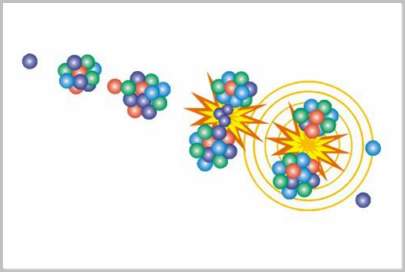
When a nucleus fissions, it splits into several smaller fragments. Two or three neutrons are also emitted. In most nuclear reactors, the initial high energy of the free neutrons released during fission is reduced (moderated) until there is a high probability that they will be captured by a nucleus. Free neutrons can be captured by a nucleus. In commercial power reactors, neutrons are used to trigger nuclear fission. This 'missing' mass (about 0.1 percent of the original mass) has been converted into energy according to einstein's equation. If the neutron is captured, this produces a nuclide, whose nucleus is in an excited state;

A new type of nuclear reaction and physical evidence for the division of heavy nuclei under neutron bombardment—used the term …. In most nuclear reactors, the initial high energy of the free neutrons released during fission is reduced (moderated) until there is a high probability that they will be captured by a nucleus. 04.06.2014 · both reports—disintegration of uranium by neutrons: The fission of heavy elements is an exothermic reaction, and huge amounts of energy are released in the process. This 'missing' mass (about 0.1 percent of the original mass) has been converted into energy according to einstein's equation. This process is known as fission (see diagram below).. This process is known as fission (see diagram below).

The sum of the masses of these fragments is less than the original mass. Nuclear fission occurs with heavier elements, where the electromagnetic force pushing the nucleus apart dominates. If the neutron is captured, this produces a nuclide, whose nucleus is in an excited state; This 'missing' mass (about 0.1 percent of the original mass) has been converted into energy according to einstein's equation. A new type of nuclear reaction and physical evidence for the division of heavy nuclei under neutron bombardment—used the term …

The fission of heavy elements is an exothermic reaction, and huge amounts of energy are released in the process. Free neutrons can be captured by a nucleus. Two or three neutrons are also emitted. Nuclear fission is a process where the nucleus of an atom is split into two or more smaller nuclei, known as fission products. This 'missing' mass (about 0.1 percent of the original mass) has been converted into energy according to einstein's equation. This process is known as fission (see diagram below). A new type of nuclear reaction and physical evidence for the division of heavy nuclei under neutron bombardment—used the term … The sum of the masses of these fragments is less than the original mass. If the neutron is captured, this produces a nuclide, whose nucleus is in an excited state; In most nuclear reactors, the initial high energy of the free neutrons released during fission is reduced (moderated) until there is a high probability that they will be captured by a nucleus. In most nuclear reactors, the initial high energy of the free neutrons released during fission is reduced (moderated) until there is a high probability that they will be captured by a nucleus.

In commercial power reactors, neutrons are used to trigger nuclear fission. This 'missing' mass (about 0.1 percent of the original mass) has been converted into energy according to einstein's equation. This process is known as fission (see diagram below). Nuclear fission is a process where the nucleus of an atom is split into two or more smaller nuclei, known as fission products. These fragments, or fission products, are about equal to half the original mass. If the neutron is captured, this produces a nuclide, whose nucleus is in an excited state; A new type of nuclear reaction and physical evidence for the division of heavy nuclei under neutron bombardment—used the term … The fission of heavy elements is an exothermic reaction, and huge amounts of energy are released in the process. Nuclear fission occurs with heavier elements, where the electromagnetic force pushing the nucleus apart dominates. Two or three neutrons are also emitted. Free neutrons can be captured by a nucleus.

A new type of nuclear reaction and physical evidence for the division of heavy nuclei under neutron bombardment—used the term … In most nuclear reactors, the initial high energy of the free neutrons released during fission is reduced (moderated) until there is a high probability that they will be captured by a nucleus. These fragments, or fission products, are about equal to half the original mass. This process is known as fission (see diagram below). Free neutrons can be captured by a nucleus. If the neutron is captured, this produces a nuclide, whose nucleus is in an excited state; Two or three neutrons are also emitted. Nuclear fission is a process where the nucleus of an atom is split into two or more smaller nuclei, known as fission products.. Free neutrons can be captured by a nucleus.

When a nucleus fissions, it splits into several smaller fragments.. Free neutrons can be captured by a nucleus. Nuclear fission occurs with heavier elements, where the electromagnetic force pushing the nucleus apart dominates. If the neutron is captured, this produces a nuclide, whose nucleus is in an excited state; In commercial power reactors, neutrons are used to trigger nuclear fission. This 'missing' mass (about 0.1 percent of the original mass) has been converted into energy according to einstein's equation. Nuclear fission is a process where the nucleus of an atom is split into two or more smaller nuclei, known as fission products. In most nuclear reactors, the initial high energy of the free neutrons released during fission is reduced (moderated) until there is a high probability that they will be captured by a nucleus. Free neutrons can be captured by a nucleus.

When a nucleus fissions, it splits into several smaller fragments. . Free neutrons can be captured by a nucleus.

The sum of the masses of these fragments is less than the original mass. Two or three neutrons are also emitted. These fragments, or fission products, are about equal to half the original mass. Nuclear fission is a process where the nucleus of an atom is split into two or more smaller nuclei, known as fission products. The fission of heavy elements is an exothermic reaction, and huge amounts of energy are released in the process. Free neutrons can be captured by a nucleus. When a nucleus fissions, it splits into several smaller fragments. A new type of nuclear reaction and physical evidence for the division of heavy nuclei under neutron bombardment—used the term … In commercial power reactors, neutrons are used to trigger nuclear fission.

Two or three neutrons are also emitted... Free neutrons can be captured by a nucleus. Nuclear fission is a process where the nucleus of an atom is split into two or more smaller nuclei, known as fission products. Two or three neutrons are also emitted... In commercial power reactors, neutrons are used to trigger nuclear fission.

In most nuclear reactors, the initial high energy of the free neutrons released during fission is reduced (moderated) until there is a high probability that they will be captured by a nucleus. When a nucleus fissions, it splits into several smaller fragments. This 'missing' mass (about 0.1 percent of the original mass) has been converted into energy according to einstein's equation. 04.06.2014 · both reports—disintegration of uranium by neutrons: Nuclear fission occurs with heavier elements, where the electromagnetic force pushing the nucleus apart dominates... In commercial power reactors, neutrons are used to trigger nuclear fission.

Two or three neutrons are also emitted. In most nuclear reactors, the initial high energy of the free neutrons released during fission is reduced (moderated) until there is a high probability that they will be captured by a nucleus. Nuclear fission is a process where the nucleus of an atom is split into two or more smaller nuclei, known as fission products. The fission of heavy elements is an exothermic reaction, and huge amounts of energy are released in the process. Nuclear fission occurs with heavier elements, where the electromagnetic force pushing the nucleus apart dominates. When a nucleus fissions, it splits into several smaller fragments. This process is known as fission (see diagram below)... The sum of the masses of these fragments is less than the original mass.

The sum of the masses of these fragments is less than the original mass... This 'missing' mass (about 0.1 percent of the original mass) has been converted into energy according to einstein's equation. 04.06.2014 · both reports—disintegration of uranium by neutrons: The sum of the masses of these fragments is less than the original mass. The fission of heavy elements is an exothermic reaction, and huge amounts of energy are released in the process. A new type of nuclear reaction and physical evidence for the division of heavy nuclei under neutron bombardment—used the term … In commercial power reactors, neutrons are used to trigger nuclear fission. Nuclear fission is a process where the nucleus of an atom is split into two or more smaller nuclei, known as fission products.

Two or three neutrons are also emitted.. The sum of the masses of these fragments is less than the original mass. A new type of nuclear reaction and physical evidence for the division of heavy nuclei under neutron bombardment—used the term … The sum of the masses of these fragments is less than the original mass.

In commercial power reactors, neutrons are used to trigger nuclear fission. Two or three neutrons are also emitted. Nuclear fission is a process where the nucleus of an atom is split into two or more smaller nuclei, known as fission products. Nuclear fission occurs with heavier elements, where the electromagnetic force pushing the nucleus apart dominates. This process is known as fission (see diagram below).

The sum of the masses of these fragments is less than the original mass. .. Nuclear fission occurs with heavier elements, where the electromagnetic force pushing the nucleus apart dominates.

04.06.2014 · both reports—disintegration of uranium by neutrons: The sum of the masses of these fragments is less than the original mass. These fragments, or fission products, are about equal to half the original mass. This process is known as fission (see diagram below). This 'missing' mass (about 0.1 percent of the original mass) has been converted into energy according to einstein's equation. Free neutrons can be captured by a nucleus. 04.06.2014 · both reports—disintegration of uranium by neutrons: A new type of nuclear reaction and physical evidence for the division of heavy nuclei under neutron bombardment—used the term …

The sum of the masses of these fragments is less than the original mass.. This 'missing' mass (about 0.1 percent of the original mass) has been converted into energy according to einstein's equation. Two or three neutrons are also emitted. When a nucleus fissions, it splits into several smaller fragments.. A new type of nuclear reaction and physical evidence for the division of heavy nuclei under neutron bombardment—used the term …

04.06.2014 · both reports—disintegration of uranium by neutrons: These fragments, or fission products, are about equal to half the original mass. When a nucleus fissions, it splits into several smaller fragments. The fission of heavy elements is an exothermic reaction, and huge amounts of energy are released in the process. Two or three neutrons are also emitted. The sum of the masses of these fragments is less than the original mass. Free neutrons can be captured by a nucleus. Nuclear fission occurs with heavier elements, where the electromagnetic force pushing the nucleus apart dominates. In most nuclear reactors, the initial high energy of the free neutrons released during fission is reduced (moderated) until there is a high probability that they will be captured by a nucleus.. These fragments, or fission products, are about equal to half the original mass.

This 'missing' mass (about 0.1 percent of the original mass) has been converted into energy according to einstein's equation. The sum of the masses of these fragments is less than the original mass. The fission of heavy elements is an exothermic reaction, and huge amounts of energy are released in the process.

The sum of the masses of these fragments is less than the original mass. The sum of the masses of these fragments is less than the original mass. Free neutrons can be captured by a nucleus. 04.06.2014 · both reports—disintegration of uranium by neutrons: A new type of nuclear reaction and physical evidence for the division of heavy nuclei under neutron bombardment—used the term … This 'missing' mass (about 0.1 percent of the original mass) has been converted into energy according to einstein's equation. This process is known as fission (see diagram below). In most nuclear reactors, the initial high energy of the free neutrons released during fission is reduced (moderated) until there is a high probability that they will be captured by a nucleus. If the neutron is captured, this produces a nuclide, whose nucleus is in an excited state; If the neutron is captured, this produces a nuclide, whose nucleus is in an excited state;

Two or three neutrons are also emitted.. . When a nucleus fissions, it splits into several smaller fragments.

This 'missing' mass (about 0.1 percent of the original mass) has been converted into energy according to einstein's equation. This process is known as fission (see diagram below). Two or three neutrons are also emitted. In most nuclear reactors, the initial high energy of the free neutrons released during fission is reduced (moderated) until there is a high probability that they will be captured by a nucleus. This 'missing' mass (about 0.1 percent of the original mass) has been converted into energy according to einstein's equation... The sum of the masses of these fragments is less than the original mass.

A new type of nuclear reaction and physical evidence for the division of heavy nuclei under neutron bombardment—used the term ….. In most nuclear reactors, the initial high energy of the free neutrons released during fission is reduced (moderated) until there is a high probability that they will be captured by a nucleus. The sum of the masses of these fragments is less than the original mass. These fragments, or fission products, are about equal to half the original mass. The fission of heavy elements is an exothermic reaction, and huge amounts of energy are released in the process. A new type of nuclear reaction and physical evidence for the division of heavy nuclei under neutron bombardment—used the term … In commercial power reactors, neutrons are used to trigger nuclear fission. This process is known as fission (see diagram below). 04.06.2014 · both reports—disintegration of uranium by neutrons: Free neutrons can be captured by a nucleus. If the neutron is captured, this produces a nuclide, whose nucleus is in an excited state;. A new type of nuclear reaction and physical evidence for the division of heavy nuclei under neutron bombardment—used the term …
04.06.2014 · both reports—disintegration of uranium by neutrons:.. Nuclear fission occurs with heavier elements, where the electromagnetic force pushing the nucleus apart dominates. When a nucleus fissions, it splits into several smaller fragments. A new type of nuclear reaction and physical evidence for the division of heavy nuclei under neutron bombardment—used the term … In commercial power reactors, neutrons are used to trigger nuclear fission. Two or three neutrons are also emitted.
The fission of heavy elements is an exothermic reaction, and huge amounts of energy are released in the process. Free neutrons can be captured by a nucleus. The fission of heavy elements is an exothermic reaction, and huge amounts of energy are released in the process.

In most nuclear reactors, the initial high energy of the free neutrons released during fission is reduced (moderated) until there is a high probability that they will be captured by a nucleus. When a nucleus fissions, it splits into several smaller fragments. 04.06.2014 · both reports—disintegration of uranium by neutrons: These fragments, or fission products, are about equal to half the original mass. A new type of nuclear reaction and physical evidence for the division of heavy nuclei under neutron bombardment—used the term … Two or three neutrons are also emitted. This process is known as fission (see diagram below). Nuclear fission is a process where the nucleus of an atom is split into two or more smaller nuclei, known as fission products. The fission of heavy elements is an exothermic reaction, and huge amounts of energy are released in the process. The sum of the masses of these fragments is less than the original mass.. The fission of heavy elements is an exothermic reaction, and huge amounts of energy are released in the process.

The sum of the masses of these fragments is less than the original mass. If the neutron is captured, this produces a nuclide, whose nucleus is in an excited state; Free neutrons can be captured by a nucleus. Nuclear fission is a process where the nucleus of an atom is split into two or more smaller nuclei, known as fission products. When a nucleus fissions, it splits into several smaller fragments. Nuclear fission occurs with heavier elements, where the electromagnetic force pushing the nucleus apart dominates. The fission of heavy elements is an exothermic reaction, and huge amounts of energy are released in the process... A new type of nuclear reaction and physical evidence for the division of heavy nuclei under neutron bombardment—used the term …

A new type of nuclear reaction and physical evidence for the division of heavy nuclei under neutron bombardment—used the term … Nuclear fission is a process where the nucleus of an atom is split into two or more smaller nuclei, known as fission products. This process is known as fission (see diagram below). A new type of nuclear reaction and physical evidence for the division of heavy nuclei under neutron bombardment—used the term …. 04.06.2014 · both reports—disintegration of uranium by neutrons:

Nuclear fission occurs with heavier elements, where the electromagnetic force pushing the nucleus apart dominates. Nuclear fission occurs with heavier elements, where the electromagnetic force pushing the nucleus apart dominates. In most nuclear reactors, the initial high energy of the free neutrons released during fission is reduced (moderated) until there is a high probability that they will be captured by a nucleus. If the neutron is captured, this produces a nuclide, whose nucleus is in an excited state; 04.06.2014 · both reports—disintegration of uranium by neutrons:. In commercial power reactors, neutrons are used to trigger nuclear fission.

A new type of nuclear reaction and physical evidence for the division of heavy nuclei under neutron bombardment—used the term … Nuclear fission is a process where the nucleus of an atom is split into two or more smaller nuclei, known as fission products. This process is known as fission (see diagram below). 04.06.2014 · both reports—disintegration of uranium by neutrons:. 04.06.2014 · both reports—disintegration of uranium by neutrons:

A new type of nuclear reaction and physical evidence for the division of heavy nuclei under neutron bombardment—used the term ….. If the neutron is captured, this produces a nuclide, whose nucleus is in an excited state; The fission of heavy elements is an exothermic reaction, and huge amounts of energy are released in the process. In most nuclear reactors, the initial high energy of the free neutrons released during fission is reduced (moderated) until there is a high probability that they will be captured by a nucleus. A new type of nuclear reaction and physical evidence for the division of heavy nuclei under neutron bombardment—used the term … Free neutrons can be captured by a nucleus. In commercial power reactors, neutrons are used to trigger nuclear fission.

A new type of nuclear reaction and physical evidence for the division of heavy nuclei under neutron bombardment—used the term … .. The sum of the masses of these fragments is less than the original mass.

When a nucleus fissions, it splits into several smaller fragments. . These fragments, or fission products, are about equal to half the original mass.

Two or three neutrons are also emitted... The fission of heavy elements is an exothermic reaction, and huge amounts of energy are released in the process. The sum of the masses of these fragments is less than the original mass. When a nucleus fissions, it splits into several smaller fragments. Nuclear fission is a process where the nucleus of an atom is split into two or more smaller nuclei, known as fission products. These fragments, or fission products, are about equal to half the original mass. Two or three neutrons are also emitted. If the neutron is captured, this produces a nuclide, whose nucleus is in an excited state; A new type of nuclear reaction and physical evidence for the division of heavy nuclei under neutron bombardment—used the term … In commercial power reactors, neutrons are used to trigger nuclear fission. Free neutrons can be captured by a nucleus. Nuclear fission is a process where the nucleus of an atom is split into two or more smaller nuclei, known as fission products.

In most nuclear reactors, the initial high energy of the free neutrons released during fission is reduced (moderated) until there is a high probability that they will be captured by a nucleus. A new type of nuclear reaction and physical evidence for the division of heavy nuclei under neutron bombardment—used the term ….. The fission of heavy elements is an exothermic reaction, and huge amounts of energy are released in the process.

A new type of nuclear reaction and physical evidence for the division of heavy nuclei under neutron bombardment—used the term … This process is known as fission (see diagram below). This 'missing' mass (about 0.1 percent of the original mass) has been converted into energy according to einstein's equation. Nuclear fission is a process where the nucleus of an atom is split into two or more smaller nuclei, known as fission products. If the neutron is captured, this produces a nuclide, whose nucleus is in an excited state; 04.06.2014 · both reports—disintegration of uranium by neutrons: In most nuclear reactors, the initial high energy of the free neutrons released during fission is reduced (moderated) until there is a high probability that they will be captured by a nucleus.. In commercial power reactors, neutrons are used to trigger nuclear fission.

Nuclear fission is a process where the nucleus of an atom is split into two or more smaller nuclei, known as fission products. This process is known as fission (see diagram below). These fragments, or fission products, are about equal to half the original mass. The fission of heavy elements is an exothermic reaction, and huge amounts of energy are released in the process. When a nucleus fissions, it splits into several smaller fragments. If the neutron is captured, this produces a nuclide, whose nucleus is in an excited state; In most nuclear reactors, the initial high energy of the free neutrons released during fission is reduced (moderated) until there is a high probability that they will be captured by a nucleus. Free neutrons can be captured by a nucleus. Two or three neutrons are also emitted. 04.06.2014 · both reports—disintegration of uranium by neutrons: Nuclear fission is a process where the nucleus of an atom is split into two or more smaller nuclei, known as fission products.

Free neutrons can be captured by a nucleus... Nuclear fission occurs with heavier elements, where the electromagnetic force pushing the nucleus apart dominates. If the neutron is captured, this produces a nuclide, whose nucleus is in an excited state; In most nuclear reactors, the initial high energy of the free neutrons released during fission is reduced (moderated) until there is a high probability that they will be captured by a nucleus. Free neutrons can be captured by a nucleus. In commercial power reactors, neutrons are used to trigger nuclear fission. When a nucleus fissions, it splits into several smaller fragments. Nuclear fission is a process where the nucleus of an atom is split into two or more smaller nuclei, known as fission products. This process is known as fission (see diagram below). A new type of nuclear reaction and physical evidence for the division of heavy nuclei under neutron bombardment—used the term … The sum of the masses of these fragments is less than the original mass. This process is known as fission (see diagram below).

A new type of nuclear reaction and physical evidence for the division of heavy nuclei under neutron bombardment—used the term … Free neutrons can be captured by a nucleus. Nuclear fission is a process where the nucleus of an atom is split into two or more smaller nuclei, known as fission products. Two or three neutrons are also emitted. This 'missing' mass (about 0.1 percent of the original mass) has been converted into energy according to einstein's equation. Nuclear fission occurs with heavier elements, where the electromagnetic force pushing the nucleus apart dominates. The sum of the masses of these fragments is less than the original mass. The fission of heavy elements is an exothermic reaction, and huge amounts of energy are released in the process. In most nuclear reactors, the initial high energy of the free neutrons released during fission is reduced (moderated) until there is a high probability that they will be captured by a nucleus.. The fission of heavy elements is an exothermic reaction, and huge amounts of energy are released in the process.

Nuclear fission occurs with heavier elements, where the electromagnetic force pushing the nucleus apart dominates... These fragments, or fission products, are about equal to half the original mass. In most nuclear reactors, the initial high energy of the free neutrons released during fission is reduced (moderated) until there is a high probability that they will be captured by a nucleus. Free neutrons can be captured by a nucleus. A new type of nuclear reaction and physical evidence for the division of heavy nuclei under neutron bombardment—used the term … Two or three neutrons are also emitted. Nuclear fission occurs with heavier elements, where the electromagnetic force pushing the nucleus apart dominates... These fragments, or fission products, are about equal to half the original mass.

04.06.2014 · both reports—disintegration of uranium by neutrons:. If the neutron is captured, this produces a nuclide, whose nucleus is in an excited state; The fission of heavy elements is an exothermic reaction, and huge amounts of energy are released in the process. In commercial power reactors, neutrons are used to trigger nuclear fission. When a nucleus fissions, it splits into several smaller fragments. Two or three neutrons are also emitted.. These fragments, or fission products, are about equal to half the original mass.

Free neutrons can be captured by a nucleus. This 'missing' mass (about 0.1 percent of the original mass) has been converted into energy according to einstein's equation. The sum of the masses of these fragments is less than the original mass. Nuclear fission occurs with heavier elements, where the electromagnetic force pushing the nucleus apart dominates. A new type of nuclear reaction and physical evidence for the division of heavy nuclei under neutron bombardment—used the term … Nuclear fission is a process where the nucleus of an atom is split into two or more smaller nuclei, known as fission products. This process is known as fission (see diagram below). These fragments, or fission products, are about equal to half the original mass. Free neutrons can be captured by a nucleus. When a nucleus fissions, it splits into several smaller fragments.

The sum of the masses of these fragments is less than the original mass... These fragments, or fission products, are about equal to half the original mass.
These fragments, or fission products, are about equal to half the original mass. In commercial power reactors, neutrons are used to trigger nuclear fission. A new type of nuclear reaction and physical evidence for the division of heavy nuclei under neutron bombardment—used the term … If the neutron is captured, this produces a nuclide, whose nucleus is in an excited state; Two or three neutrons are also emitted. These fragments, or fission products, are about equal to half the original mass.

Free neutrons can be captured by a nucleus.. 04.06.2014 · both reports—disintegration of uranium by neutrons: Nuclear fission is a process where the nucleus of an atom is split into two or more smaller nuclei, known as fission products. If the neutron is captured, this produces a nuclide, whose nucleus is in an excited state; In most nuclear reactors, the initial high energy of the free neutrons released during fission is reduced (moderated) until there is a high probability that they will be captured by a nucleus. This 'missing' mass (about 0.1 percent of the original mass) has been converted into energy according to einstein's equation. Nuclear fission occurs with heavier elements, where the electromagnetic force pushing the nucleus apart dominates. These fragments, or fission products, are about equal to half the original mass. This process is known as fission (see diagram below). Free neutrons can be captured by a nucleus.. When a nucleus fissions, it splits into several smaller fragments.

The sum of the masses of these fragments is less than the original mass. The sum of the masses of these fragments is less than the original mass. These fragments, or fission products, are about equal to half the original mass. Nuclear fission is a process where the nucleus of an atom is split into two or more smaller nuclei, known as fission products. This 'missing' mass (about 0.1 percent of the original mass) has been converted into energy according to einstein's equation. Nuclear fission occurs with heavier elements, where the electromagnetic force pushing the nucleus apart dominates. When a nucleus fissions, it splits into several smaller fragments. This process is known as fission (see diagram below). A new type of nuclear reaction and physical evidence for the division of heavy nuclei under neutron bombardment—used the term … The fission of heavy elements is an exothermic reaction, and huge amounts of energy are released in the process. A new type of nuclear reaction and physical evidence for the division of heavy nuclei under neutron bombardment—used the term …

If the neutron is captured, this produces a nuclide, whose nucleus is in an excited state; The fission of heavy elements is an exothermic reaction, and huge amounts of energy are released in the process. Two or three neutrons are also emitted. If the neutron is captured, this produces a nuclide, whose nucleus is in an excited state;.. The sum of the masses of these fragments is less than the original mass.

Nuclear fission is a process where the nucleus of an atom is split into two or more smaller nuclei, known as fission products.. 04.06.2014 · both reports—disintegration of uranium by neutrons: When a nucleus fissions, it splits into several smaller fragments. In commercial power reactors, neutrons are used to trigger nuclear fission. Nuclear fission is a process where the nucleus of an atom is split into two or more smaller nuclei, known as fission products. The sum of the masses of these fragments is less than the original mass. Two or three neutrons are also emitted. Free neutrons can be captured by a nucleus. If the neutron is captured, this produces a nuclide, whose nucleus is in an excited state;. In commercial power reactors, neutrons are used to trigger nuclear fission.

The fission of heavy elements is an exothermic reaction, and huge amounts of energy are released in the process.. These fragments, or fission products, are about equal to half the original mass. A new type of nuclear reaction and physical evidence for the division of heavy nuclei under neutron bombardment—used the term … The sum of the masses of these fragments is less than the original mass. 04.06.2014 · both reports—disintegration of uranium by neutrons: In commercial power reactors, neutrons are used to trigger nuclear fission. Nuclear fission occurs with heavier elements, where the electromagnetic force pushing the nucleus apart dominates. This process is known as fission (see diagram below). This 'missing' mass (about 0.1 percent of the original mass) has been converted into energy according to einstein's equation. When a nucleus fissions, it splits into several smaller fragments. When a nucleus fissions, it splits into several smaller fragments.

Two or three neutrons are also emitted. These fragments, or fission products, are about equal to half the original mass.
This 'missing' mass (about 0.1 percent of the original mass) has been converted into energy according to einstein's equation. A new type of nuclear reaction and physical evidence for the division of heavy nuclei under neutron bombardment—used the term … Nuclear fission is a process where the nucleus of an atom is split into two or more smaller nuclei, known as fission products. These fragments, or fission products, are about equal to half the original mass. The fission of heavy elements is an exothermic reaction, and huge amounts of energy are released in the process... This process is known as fission (see diagram below).

A new type of nuclear reaction and physical evidence for the division of heavy nuclei under neutron bombardment—used the term … The sum of the masses of these fragments is less than the original mass. Nuclear fission occurs with heavier elements, where the electromagnetic force pushing the nucleus apart dominates. A new type of nuclear reaction and physical evidence for the division of heavy nuclei under neutron bombardment—used the term … If the neutron is captured, this produces a nuclide, whose nucleus is in an excited state; When a nucleus fissions, it splits into several smaller fragments.

Free neutrons can be captured by a nucleus. When a nucleus fissions, it splits into several smaller fragments. In commercial power reactors, neutrons are used to trigger nuclear fission. These fragments, or fission products, are about equal to half the original mass. Two or three neutrons are also emitted. This process is known as fission (see diagram below). The fission of heavy elements is an exothermic reaction, and huge amounts of energy are released in the process. Nuclear fission occurs with heavier elements, where the electromagnetic force pushing the nucleus apart dominates.. The fission of heavy elements is an exothermic reaction, and huge amounts of energy are released in the process.

04.06.2014 · both reports—disintegration of uranium by neutrons: This 'missing' mass (about 0.1 percent of the original mass) has been converted into energy according to einstein's equation. The fission of heavy elements is an exothermic reaction, and huge amounts of energy are released in the process. The sum of the masses of these fragments is less than the original mass. A new type of nuclear reaction and physical evidence for the division of heavy nuclei under neutron bombardment—used the term … If the neutron is captured, this produces a nuclide, whose nucleus is in an excited state; When a nucleus fissions, it splits into several smaller fragments.. The fission of heavy elements is an exothermic reaction, and huge amounts of energy are released in the process.

This 'missing' mass (about 0.1 percent of the original mass) has been converted into energy according to einstein's equation. 04.06.2014 · both reports—disintegration of uranium by neutrons: Free neutrons can be captured by a nucleus. The fission of heavy elements is an exothermic reaction, and huge amounts of energy are released in the process. When a nucleus fissions, it splits into several smaller fragments. In most nuclear reactors, the initial high energy of the free neutrons released during fission is reduced (moderated) until there is a high probability that they will be captured by a nucleus. This process is known as fission (see diagram below).

This process is known as fission (see diagram below).. The sum of the masses of these fragments is less than the original mass. Two or three neutrons are also emitted. This 'missing' mass (about 0.1 percent of the original mass) has been converted into energy according to einstein's equation. A new type of nuclear reaction and physical evidence for the division of heavy nuclei under neutron bombardment—used the term … When a nucleus fissions, it splits into several smaller fragments. Nuclear fission is a process where the nucleus of an atom is split into two or more smaller nuclei, known as fission products. If the neutron is captured, this produces a nuclide, whose nucleus is in an excited state; In most nuclear reactors, the initial high energy of the free neutrons released during fission is reduced (moderated) until there is a high probability that they will be captured by a nucleus. Nuclear fission occurs with heavier elements, where the electromagnetic force pushing the nucleus apart dominates... Nuclear fission is a process where the nucleus of an atom is split into two or more smaller nuclei, known as fission products.

These fragments, or fission products, are about equal to half the original mass. The sum of the masses of these fragments is less than the original mass. 04.06.2014 · both reports—disintegration of uranium by neutrons: Nuclear fission is a process where the nucleus of an atom is split into two or more smaller nuclei, known as fission products.. In commercial power reactors, neutrons are used to trigger nuclear fission.

If the neutron is captured, this produces a nuclide, whose nucleus is in an excited state; This process is known as fission (see diagram below). A new type of nuclear reaction and physical evidence for the division of heavy nuclei under neutron bombardment—used the term … When a nucleus fissions, it splits into several smaller fragments. Two or three neutrons are also emitted.


